Biomechanics of Disc Golf: Why We Started Analysing the Body
The disc has always been our instrument. Now the body becomes one too — and everything we thought we knew about the throw is about to get a lot more interesting.
Every throw starts before the disc leaves your hand
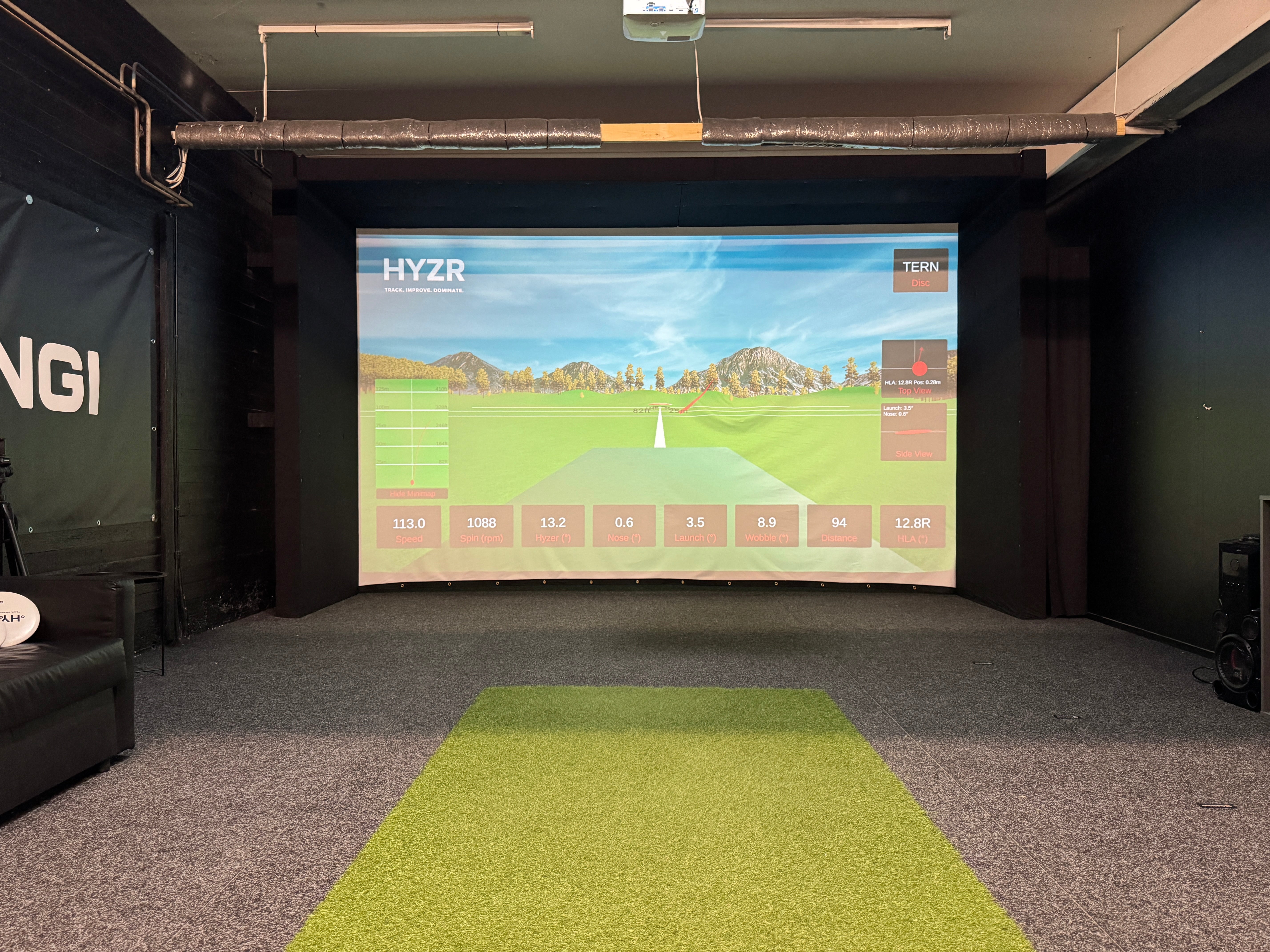
When we built HYZR, we set out to create the most complete picture of a disc golf throw ever captured. Nine metrics. Real-time feedback. Camera-based precision that works with any disc. For a sport that had almost no data, it was a dramatic step forward.
But the longer we spent studying throws — thousands of them, from beginners to elite players — the more clearly we saw a limitation. Not in our hardware. In our frame of reference.
The disc tells you what happened at the moment of release. It does not tell you why. A throw with 95 km/h release speed and clean spin looks identical in disc data whether it came from perfect mechanics or a compensating lunge. Two players can produce the same numbers with completely different bodies, and completely different futures — one improving, one heading toward injury.
To truly understand the throw, you have to start where the throw actually begins. In the body.
A sport with almost no biomechanical science
Here is something about disc golf research: the biomechanics of the disc golf throw are almost completely unstudied.
As of 2024, academic researchers were still describing their work as "the first" investigation into proper disc golf throw mechanics. In a sport played by millions of people. The kinetic chain — how weight transfer, hip rotation, shoulder sequencing, hand path, and wrist snap combine to produce the disc launch — has never been formally mapped for this specific movement.
Coaches have taught from intuition, video, and analogies borrowed from baseball, tennis, and javelin. Players have improved through feel and repetition. But nobody has had the data to say with precision: this is what a good disc golf throw looks like from the inside.
That is the gap we intend to fill.

What we have built, and what comes next
The first visible step is already live. When you throw with HYZR today, you will see a real-time skeleton overlay on your swing camera footage — a stick figure representation of your body position through the throw sequence. It is the beginning of something much larger.
In the very near future, that skeleton will start producing numbers. Body metrics specific to the disc golf throw, developed from the ground up for this sport and this movement. We are not adapting models built for other sports. We are building the reference model for disc golf from scratch — using real throws, real players, and the disc data we already capture on the other side of the equation to create real, objective and actionable metrics about the throw.
What makes this genuinely unique is that we are the only system in the world measuring both sides simultaneously. The body mechanics that produce the throw, and the disc metrics that result from it. The connection between the two — what the body does and what the disc does milliseconds later — is the territory we are mapping.
Why this matters for every player
The immediate application is improvement. When you can see exactly where in your kinetic chain you are losing speed, adding nose angle, or introducing wobble, coaching becomes precise in a way it has never been before.
The second application is injury prevention. Studies show that over 80% of disc golfers experience sport-related injuries, the majority from overuse and repetitive strain. The mechanics that lead to elbow and shoulder problems are visible in the kinetic chain before they manifest as pain. We aim to surface those signals.
The third application is the one we are most excited about: building the first publicly available biomechanical metrics for disc golf. Aggregating, anonymised throw data from players across all skill levels, building the scientific foundation the sport has never had. A resource for coaches, researchers, equipment designers, and the next generation of players.
This is what we mean by the ultimate experience
When HYZR launched, we said we were building the ultimate disc golf experience. We meant it seriously. Not as a marketing phrase, but as a direction of travel — a commitment to keep pushing until the technology matches the ambition the sport deserves.
Body analysis is the next frontier of that journey. The disc was always our instrument. Now the body becomes one too.
More details on the first body metrics are coming soon. If you are a coach, a researcher, or a player who wants to be part of shaping this — we would love to hear from you.
HYZR · gethyzr.com · Designed and built in Finland